How to choose POS software in Zimbabwe
A practical Zimbabwe POS buying guide covering offline selling, stock, multi-currency records, hardware, migration, support and total cost.
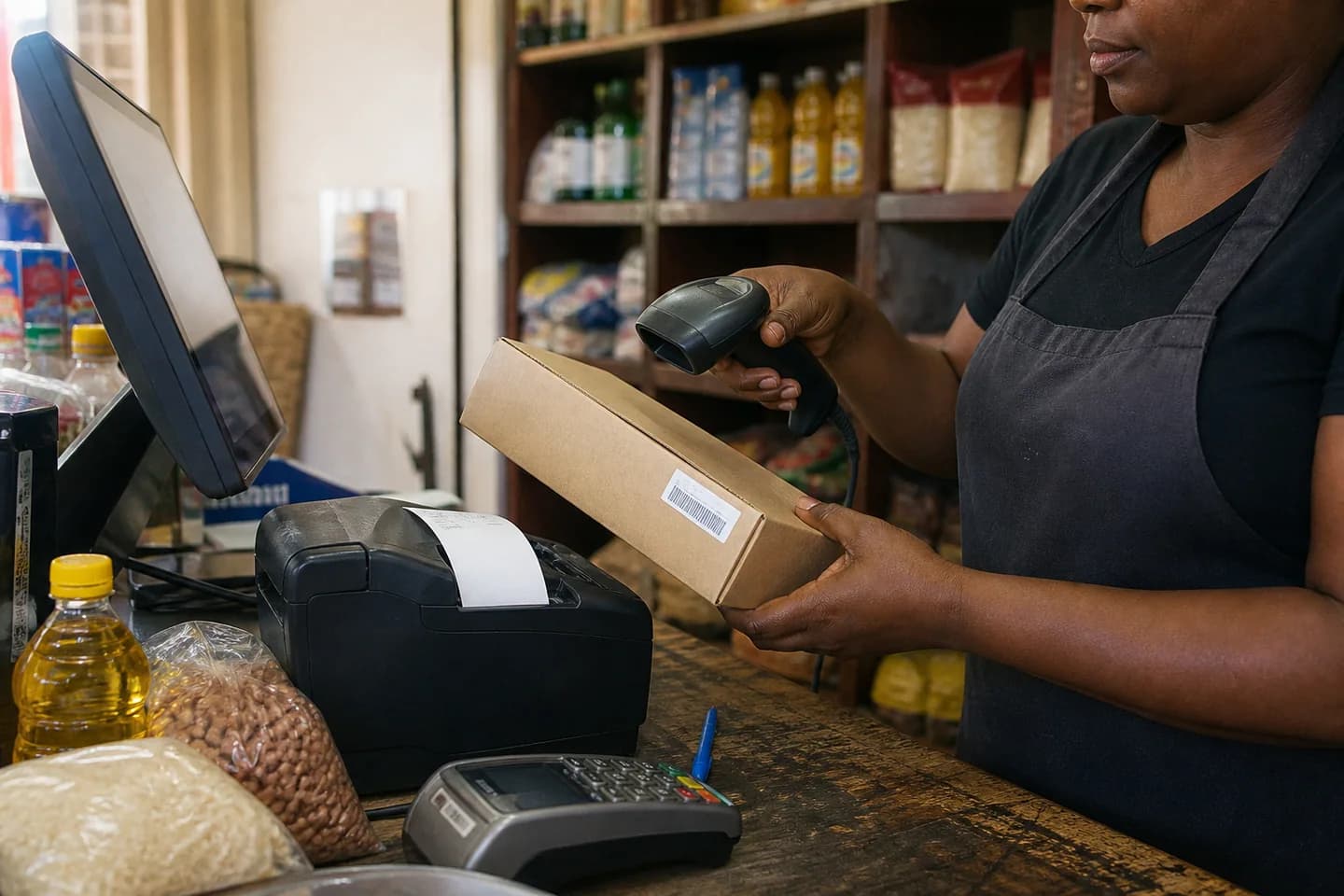
Choose a POS by testing the sale after it leaves the till. The right system should keep the queue moving, update stock and the books from the same transaction, continue through an outage, and give you a written total cost before you commit.
Start with the money the current till is losing
A feature list is the wrong place to begin. Write down where money or time is leaking today: queues that make customers leave, stock that exists in the spreadsheet but not on the shelf, credit sales nobody follows up, or receipts that finance retypes at night. Those failures tell you what the demo must prove.
Give each problem a rough monthly cost. Even an estimate creates a buying threshold. A cheaper till that leaves the expensive failure untouched is not cheaper software.
Take this checklist into the demo
- How many sales are abandoned when the queue slows?
- How often does a customer ask for stock the system says is available?
- How many hours are spent retyping, reconciling or correcting a trading day?
- How much customer credit is overdue because the balance was not visible at the counter?
Make the vendor prove what happens during an outage
‘Works offline’ can mean anything from a read-only screen to a complete sale. Ask the vendor to disconnect the demo device in front of you. Ring a sale, apply a price, take payment, print a receipt, process a return and open the till on a second device. Then reconnect and show where every event landed.
The test should also expose limits. A responsible supplier will tell you which workflows continue, which wait for connectivity, how duplicates are prevented and how a manager sees the last successful sync. Do not accept a promise that cannot be demonstrated.
The outage test belongs in the buying process, not in the first real power cut after launch.
Follow one sale into stock, cash and the books
A POS saves the most money when the transaction becomes the source record for the rest of the business. In the demo, ring one sale and ask to see the stock position, payment record, customer balance, revenue, cost and branch margin afterwards. If those figures require exports or retyping, you are buying another island.
Test the awkward events too: a part payment, customer credit, return, exchange, discount approval and branch transfer. Good software preserves the original event and records the correction instead of erasing the trail.
Test the way Zimbabwean customers actually pay
List every currency and payment method you accept, then test the combinations that cause the most reconciliation work. A transaction should keep the currency and rate it happened at. The payment record should still make sense when finance checks cash, mobile money, card and bank receipts later.
Treat fiscal and statutory requirements as a separate written check. Ask which exact workflow, integration and document output is supported for your business. A broad compliance badge is not evidence, and a buyer should never assume approval from marketing copy alone.
Price the full operating system, not the till licence
The real monthly cost includes users, branches, inventory, accounting, support, devices, payment charges, onboarding and the tools you still need beside the POS. Ask for one written figure at your current team size and another at the size you expect in twelve months.
Corelith Start covers up to five users at one site and includes Sell, Stock and Books. That bridge is visible because a buyer should be able to connect the module and the plan without waiting for a sales call; the figures are published on the pricing page. Hardware and guided onboarding are quoted separately where required.
Run a cutover rehearsal before opening day
Migration is where a sound product can still become an expensive project. Agree which products, prices, customers, balances, suppliers and opening stock will move. Clean duplicates before import, nominate one owner for each dataset and reconcile totals against the old record.
Before launch, run a real trading shift in a safe environment. Include the busiest receipt, an outage, a return, a cash-up and the end-of-day handover. Train people by role, not with one generic tour. The goal is a boring first day: familiar work, fewer steps and clear support when something is wrong.
Take this checklist into the demo
- Written scope and total price
- Live outage demonstration
- Sale-to-stock-to-books trace
- Real currencies and payment methods
- Migration reconciliation and rollback plan
- Named support route and response expectation
Straight answers before you commit.
What should POS software in Zimbabwe cost?
Compare the total cost for your users, branches, stock, accounting, support, hardware and onboarding. Corelith Start covers up to five users at one site, with Sell, Stock and Books included, and its figure is published on the pricing page.
Should a Zimbabwean POS work without internet?
If connectivity can interrupt trade, offline behaviour should be a buying requirement. Ask the supplier to disconnect the demo and prove the exact selling, receipt, return and synchronisation workflow.
Do I need separate inventory and accounting software?
Not necessarily. A connected system can update inventory, customer balances and accounting from the original sale, which removes retyping and makes errors easier to trace.